
Today’s GospelMatthew 11:25–30
There’s a certain kind of tired that sleep doesn’t fix. You know the one. You wake up already carrying it. It sits on your shoulders through breakfast, follows you to work, and is still there when you finally lie down at night. Not tired in the body. Tired in the soul.

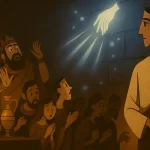
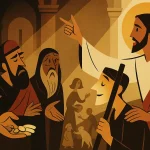
That’s the exact tiredness Jesus is talking to this Sunday. “Come to me, all you who labor and are heavily burdened, and I will give you rest.” He isn’t speaking to lazy people. He’s speaking to the ones who are trying the hardest — and sinking anyway.
A king who rides a donkey
Before we even get to the Gospel, the first reading sets the tone. Zechariah paints a picture of a coming king: “humble, and riding on a donkey, on a colt, the foal of a donkey.” Not a warhorse. A donkey. The prophet is telling us, centuries early, what kind of God is coming — one whose power shows up as gentleness.
Keep that image in your mind, because in the Gospel that same gentle king turns to the exhausted and does something strange. He offers them rest. But watch how he offers it.
The strangest way to offer rest
If you were bone-tired and someone promised you rest, you’d expect them to say: put the load down. Walk away. Take a break. That’s what rest means to us.
Jesus says the opposite. “Take my yoke upon you, and learn from me.” A yoke? That’s the wooden frame you put on an ox to make it pull. He promises rest — and then hands you a harness. What kind of rest is that?
St. Augustine caught the paradox and turned it over gently. The soul is restless, he said, until it rests in God. Not restless until it has no burden — restless until it carries the right one. We were built to pull. The only question is what, and with whom.
Two oxen, one yoke
Here’s the detail that unlocks the whole thing. Farmers in Jesus’ day had a practice everyone listening would have known. You never yoked a young, untrained ox alone. You paired it with an older, stronger one. The strong ox carried the real weight and set the pace. The young one just had to keep step and learn.
Now hear his words again: “Take my yoke, and learn from me.” That’s the picture, exactly. He isn’t adding a burden to your back. He’s climbing into the harness beside you — the stronger one, taking the weight, setting the pace. “My yoke is easy, and my burden is light.” Light, because you were never meant to pull it alone.
And the strength in that harness isn’t even yours. Paul says it plainly in the second reading: the Spirit who raised Jesus from the dead lives in you. The same power that broke open the tomb is the power pulling beside you. You are not yoked to a memory. You are yoked to the living God.
So the weary aren’t told to lie down and quit. They’re told to get out of the wrong harness and into the right one. Rest, it turns out, is not the absence of a load. It’s the presence of the One who shares it.
Today’s Takeaway
You’re worn out because you’ve been pulling alone — that’s the real weight Jesus is naming. Name the one thing you’ve been dragging by yourself: the worry, the work, the person you carry. Then, in a quiet moment today, hand one end of it to him. Say it out loud if you can: “Lord, I can’t pull this alone. Get in the harness with me.”
Let Us Pray
Gentle Jesus, humble king, you know how tired I am. I’ve been pulling as if it all rests on my strength. Today I take your yoke — not another burden, but your shoulder beside mine. Teach me your pace. Give my soul the rest it can’t find on its own. Amen.
Common Questions
What are the Mass readings for Sunday, July 5, 2026?
The Fourteenth Sunday in Ordinary Time: First Reading — Zechariah 9:9–10; Psalm 145; Second Reading — Romans 8:9, 11–13; Gospel — Matthew 11:25–30. What does “my yoke is easy” mean?
A yoke joined two oxen so a stronger one carried the weight and set the pace. Jesus offers to share our burden, not remove it — the load is light because we no longer pull alone. Why is the king in the first reading riding a donkey?
Zechariah foretells a Messiah whose power is gentleness, not force — fulfilled when Jesus enters Jerusalem on Palm Sunday, humble and bringing peace.